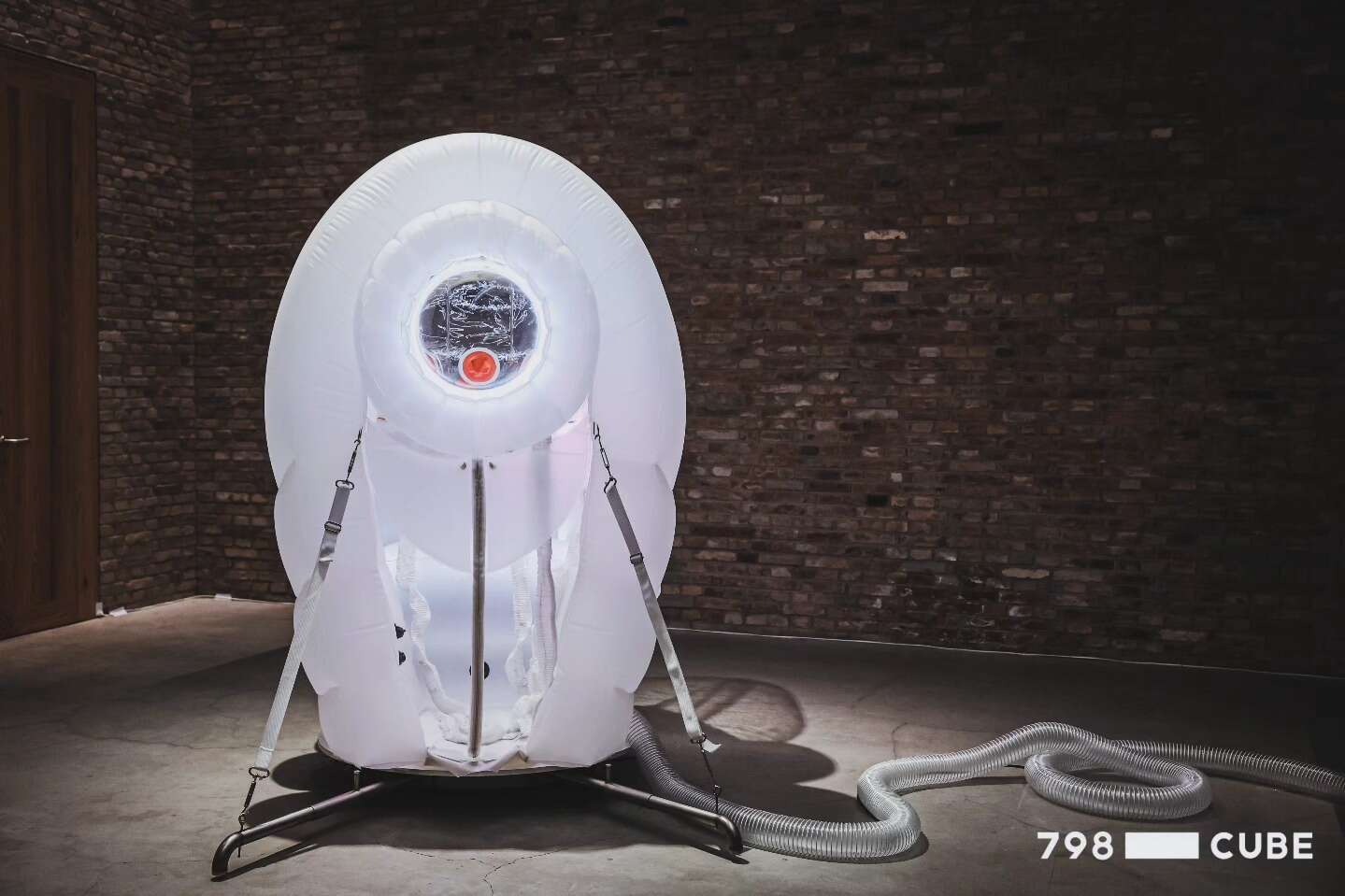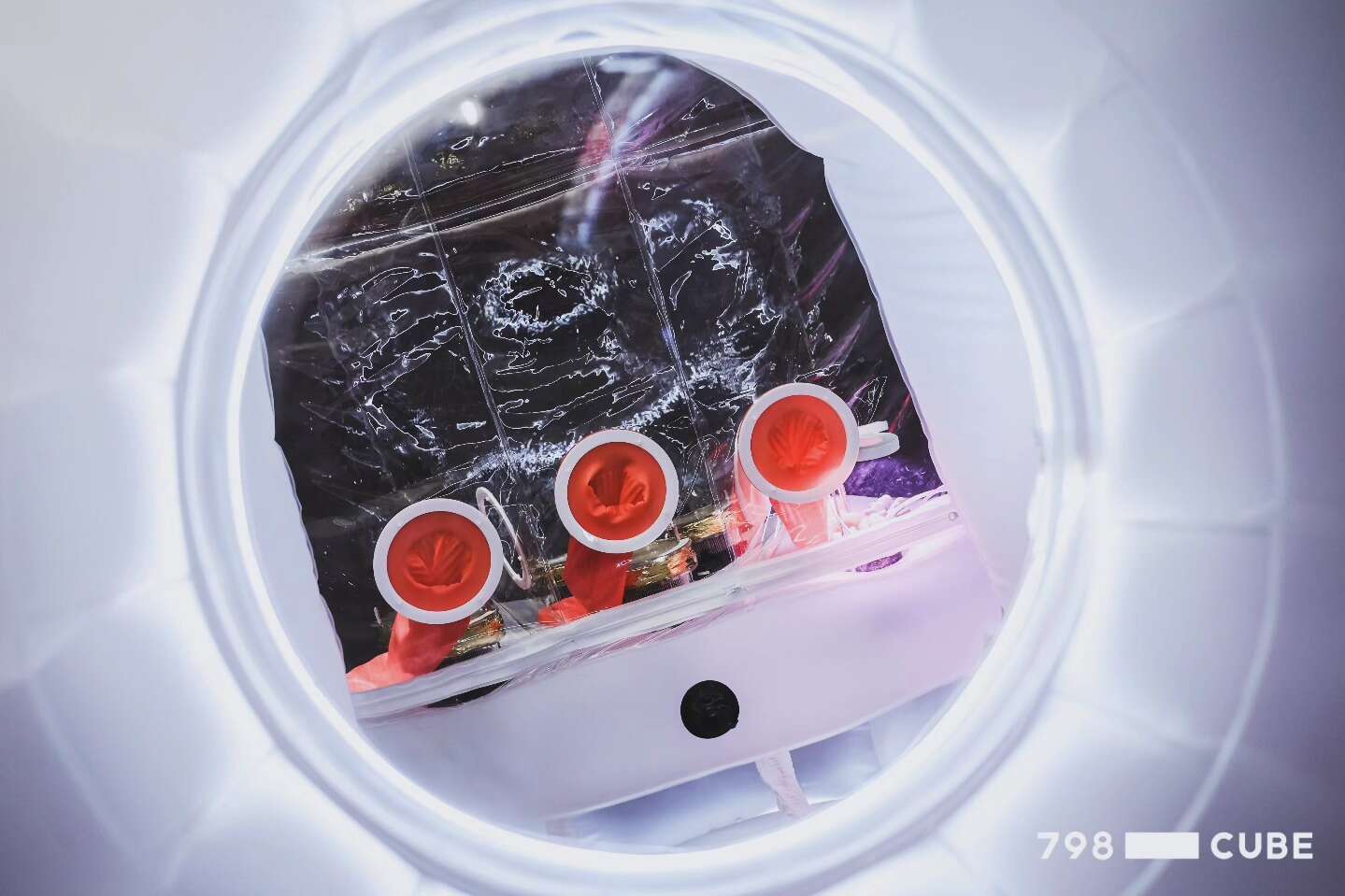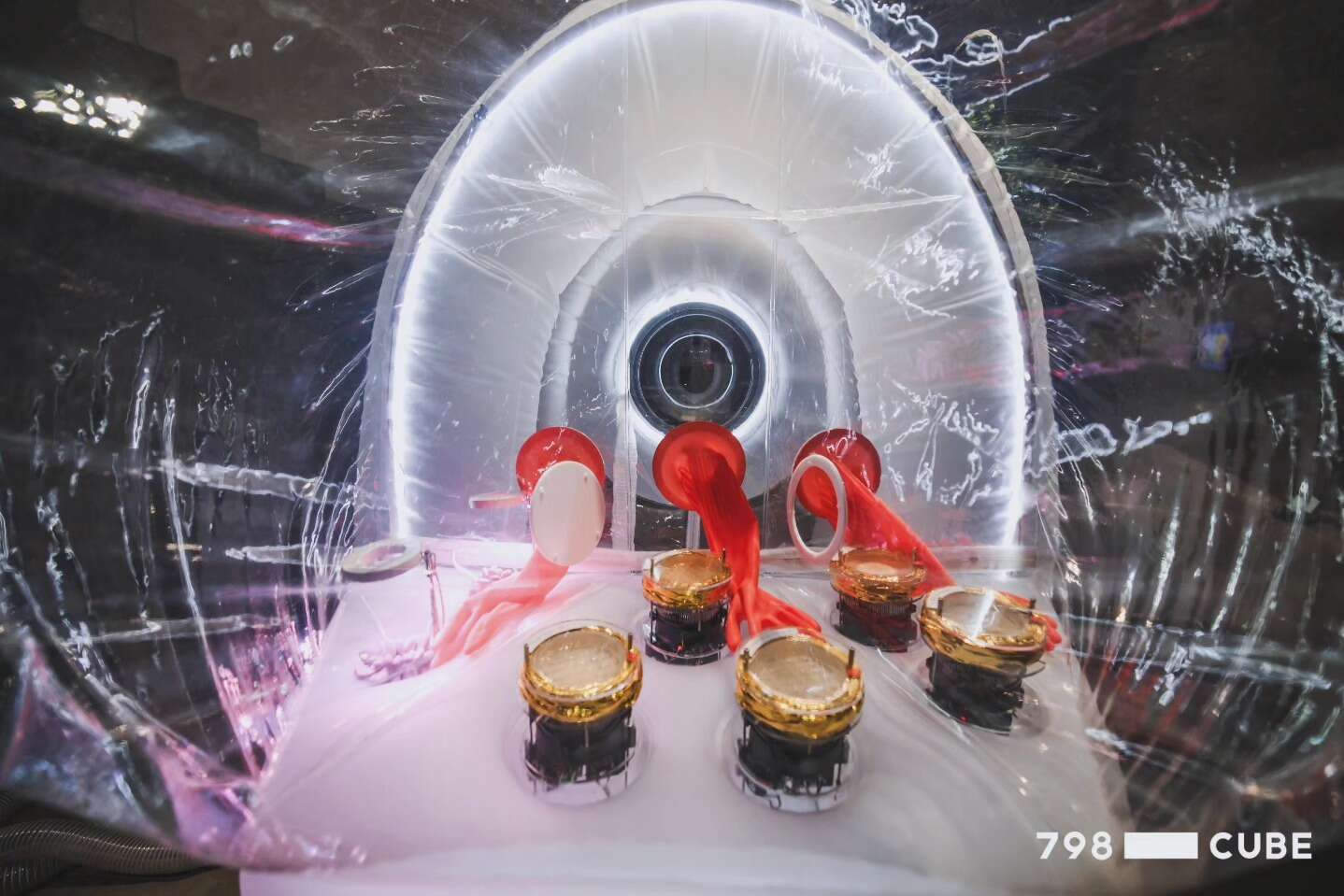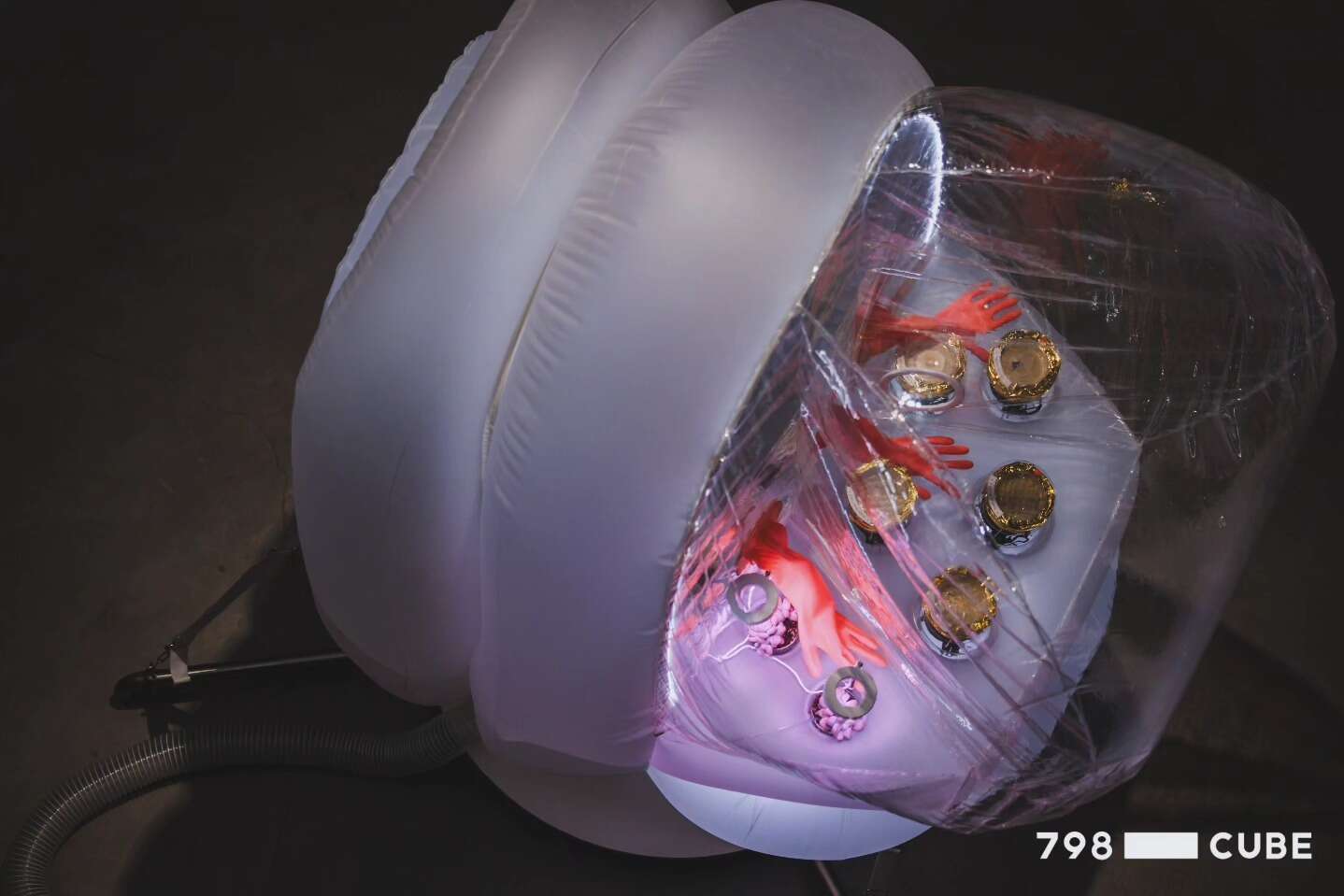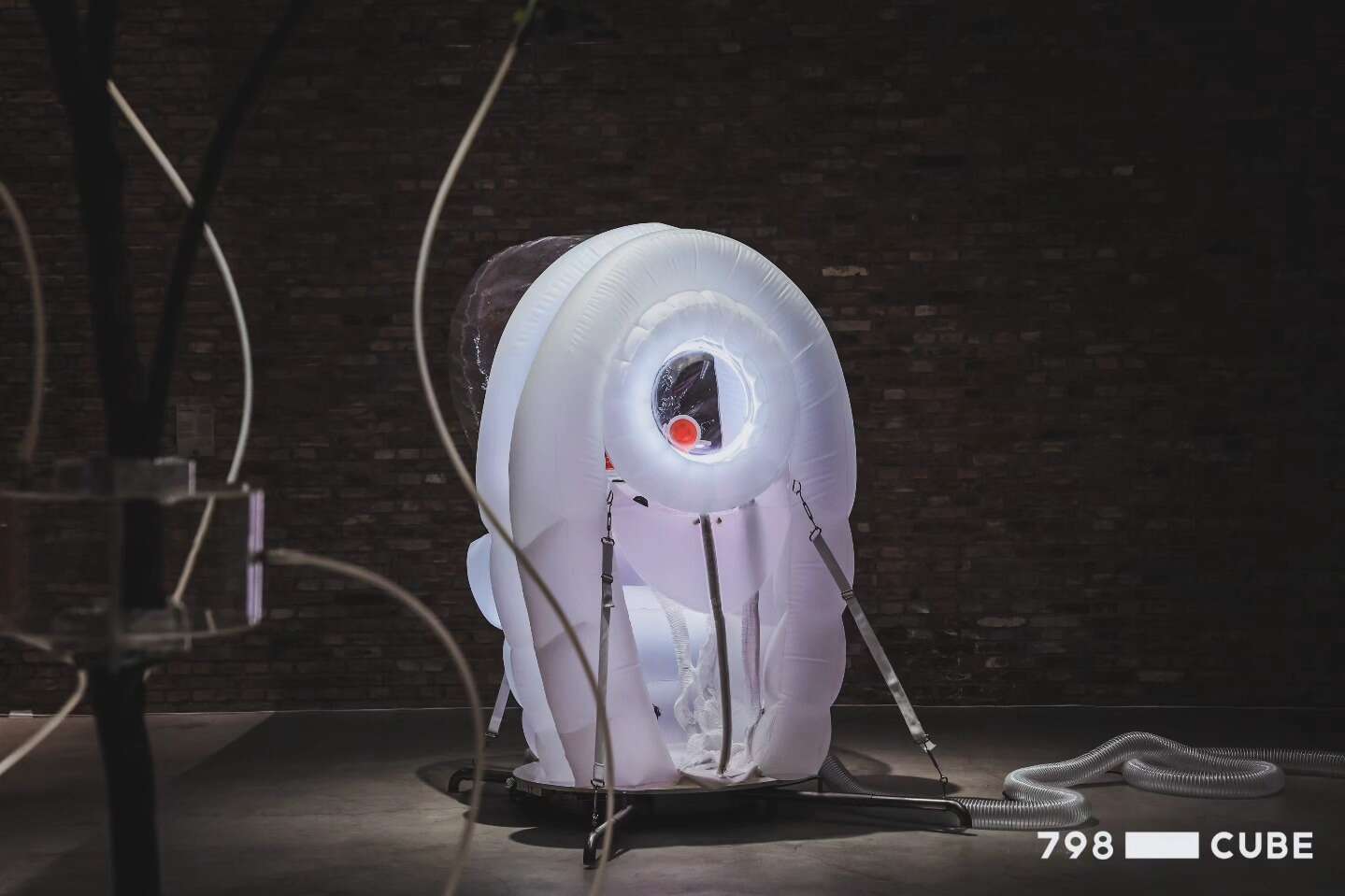
The Biosymbiotic Exoskeleton is an inflatable spacesuit that makes it possible to coexist symbiotically in the radical extraterrestrial environment with the bacteria, fungi, archaea and viruses that make up an individual’s microbiome.
The spacesuit becomes an ecology of organisms, breaking down the human body into parts for which specific care and maintenance procedures can be established in order to prevent dysbiosis, which is detrimental to the normal functioning of the body. The body, dismantled per partes, thus becomes an organised system for which it is possible to create living conditions that are different from those we know on planet Earth, thereby transforming ways of existing. By reverse-engineering an imaginary situation in outer space where the human body changes its form, projections can be made about the possibilities of survival on an ecologically altered planet, where the human body is disassembled into functionalities rhizomatically linked between different species.
The microbiome as an organ plays a crucial role in survival, not only in an ontological sense but also in a very personal, intimate way. To be alive is to be in symbiosis with non-human living systems that extend far beyond the physical boundaries of the human body.